The Oil Ministry plans to drill the wells by June 2027 as part of a 101-well exploration campaign, timed with a $117 million offshore seismic survey, as it tries to reverse a 29% fall in domestic gas production since 2023 and contain a rising import bill.
| 14 wells
Mediterranean exploration wells planned by the end of FY2026/27 |
Up to 12 tcf
Potential gas reserves targeted by the Mediterranean wells |
−29%
Fall in Egypt’s gas production between 2023 and 2025 |
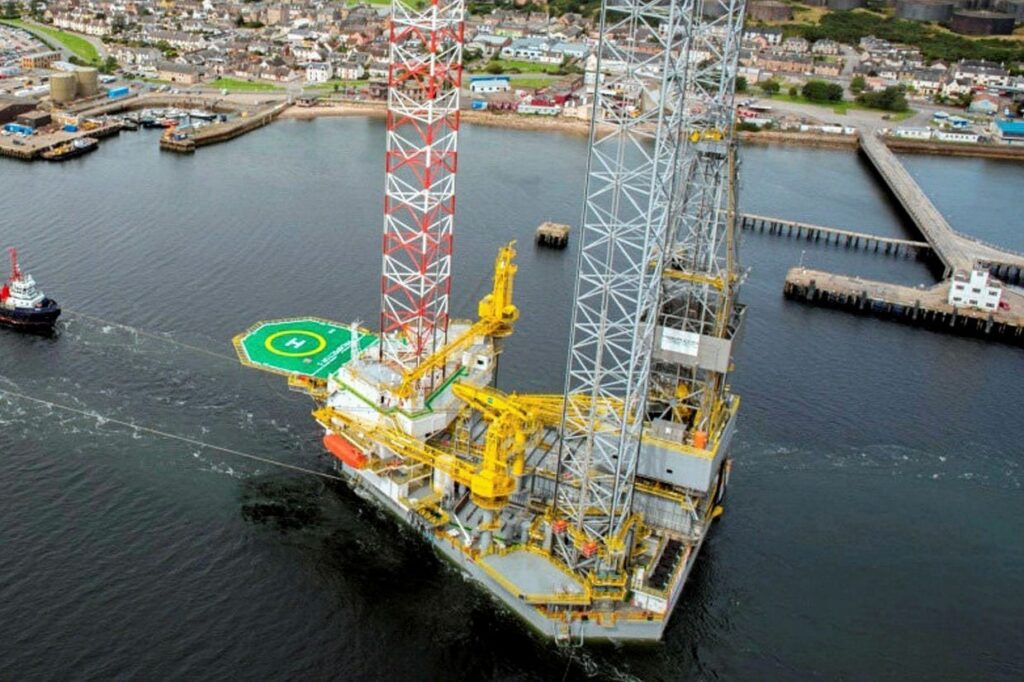
Egypt’s Oil Ministry plans to drill 14 exploration wells in the Mediterranean by the end of the 2026/27 fiscal year in June 2027, targeting potential gas reserves of up to 12 trillion cubic feet (tcf), two government officials told EnterpriseAM. The officials said the aim is for Egypt to become self-sufficient in petroleum products by 2029.
The Mediterranean wells are part of a 101-well exploration campaign with international companies this fiscal year. The Western Desert accounts for 67 of the wells, followed by the Mediterranean with 14, the Gulf of Suez with 9, the Nile Delta with 6 and the Eastern Desert with 5. The campaign sits within a wider programme, announced in October 2025 as a $5.7 billion plan to drill 480 exploration wells over five years, which has since been expanded to 580 wells through 2030.
Several international companies have drilling plans offshore. Arcius Energy, the joint venture between bp and ADNOC’s XRG, plans to drill the North 6 and Atoll wells, the latter in its wholly owned North Damietta concession. Shell is preparing a well in its Merneith concession, and ExxonMobil plans to begin drilling in its Cairo concession in the first quarter of 2027, a year later than it had previously targeted.
Seismic survey to start within weeks
The drilling campaign is timed to coincide with the first phase of a large ocean-bottom-node (OBN) seismic survey. Petroleum and Mineral Resources Minister Karim Badawi said on 18 October that work on the first phase, covering about 18,000 square kilometres of Egypt’s Eastern Mediterranean waters, would begin within two weeks. The survey is run by the state-owned Egyptian Natural Gas Holding Company (EGAS) with a consortium of SLB and Viridien, which won the tender in 2025.
The first phase is expected to cost $117 million and is part of a programme covering up to 95,000 square kilometres in three phases over seven years. The survey vessel Commander has docked at Port Said, with two more vessels due to join. Work will cover the Denise area off Port Said and the Ras El Bar area until the end of 2026, with the next round planned for 2027. Badawi said the processed data will be turned into investment prospects for international companies.
Production down by almost a third
The exploration push responds to a steep decline in output. Egypt’s gas production fell from about 59 billion cubic metres (bcm) in 2023 to 50 bcm in 2024 and 42 bcm in 2025, and first-quarter 2026 output of 9.85 bcm was about 8% lower than a year earlier, according to figures compiled by EnterpriseAM. The Zohr field, which still supplies about 30% of national output, produces about 1.2 billion cubic feet per day (bcf/d), against a peak of 3.2 bcf/d in 2019. Officials say natural decline removes about 120 million cubic feet per day (mmcf/d) of output from existing fields each month, while five wells due online in October will add only about 100 mmcf/d.
The shortfall has turned Egypt from an LNG exporter into a significant importer. Gas imports rose from about 8.5 bcm in 2023 to 22.2 bcm in 2025, including about 13.1 bcm of LNG, and the country now operates four floating storage and regasification units. Pipeline imports, which come mainly from Israel, fell 34% year on year in the first quarter of 2026 after supplies were cut during the regional war. The gas import bill reached $7.9 billion last year and is expected to rise by about 26% this fiscal year, to about $10.7 billion. Higher gas costs have also pushed the power sector to burn more fuel oil (mazut).
Officials said successful exploration could add 1.5 to 2 bcf/d of output over the next three years, taking production back towards about 7 bcf/d, with Mediterranean offshore output rising to about 2 bcf/d from about 1.5 bcf/d. The government wants to cut its import bill by about $500 million a month and to end imports of petroleum products by 2030.
Analysis
The Mediterranean is where Egypt’s gas revival began, and it is where any recovery must start. Zohr, discovered by Eni in 2015, restored Egypt’s self-sufficiency within a few years and allowed it to resume LNG exports; its decline since 2019 has reversed that position. Mediterranean prospects carry the largest potential volumes, which is why 14 deepwater wells matter more to the national gas balance than the 67 planned onshore in the Western Desert, where targets are typically smaller and more oil-weighted.
“Up to 12 tcf” is a measure of potential, not of reserves. Exploration success rates mean only part of that is likely to be proven, and deepwater discoveries usually take several years to reach production unless they can be tied back to existing infrastructure. Even with good results, wells drilled in 2026/27 are unlikely to make a material difference to supply before the end of the decade, so Egypt’s reliance on imported LNG looks set to persist for several years.
What is different this time is investor confidence. Egypt cleared its arrears to foreign oil companies, which peaked at about $6.1 billion in June 2024, by 10 June 2026, and has secured about $19 billion of new upstream commitments over three years, including $8 billion from Eni, $5 billion from bp, $4 billion from Apache and $2 billion from Arcius. Payment delays had been the main deterrent to drilling. With the arrears cleared and new seismic data on the way, this campaign is more credible than earlier plans. The terms on which new gas is priced will decide how much of the potential is pursued.
A successful campaign would also support Egypt’s ambition to act as a regional gas hub. Its two liquefaction plants at Idku and Damietta give it an export route for East Mediterranean gas, including gas from Cyprus’s Cronos discovery, which TotalEnergies and Eni agreed in 2025 to export through Egyptian facilities. New domestic supply would help keep those plants in use, although the domestic market will have first call on any new gas.
Investor Outlook
- Offshore services and seismic: The OBN programme and the 101-well campaign will sustain demand for rigs, subsea equipment and data processing through 2027, with the first survey phase running to the end of 2026 and a further round planned for 2027.
- International oil companies: Cleared arrears and new acreage data improve Egypt’s risk profile. The key variables are gas pricing terms for new discoveries and the speed of approvals for tie-backs to existing infrastructure.
- LNG suppliers: Egypt will remain a significant buyer until new production arrives, and Cairo has been in talks with energy majors on multi-year supply deals. Seasonal peaks will continue to add to competition for spot cargoes.
- Macro and currency: A gas import bill of about $10.7 billion this fiscal year weighs on Egypt’s external accounts. Exploration success would ease that pressure over the medium term rather than the short term.